Day board and calendar
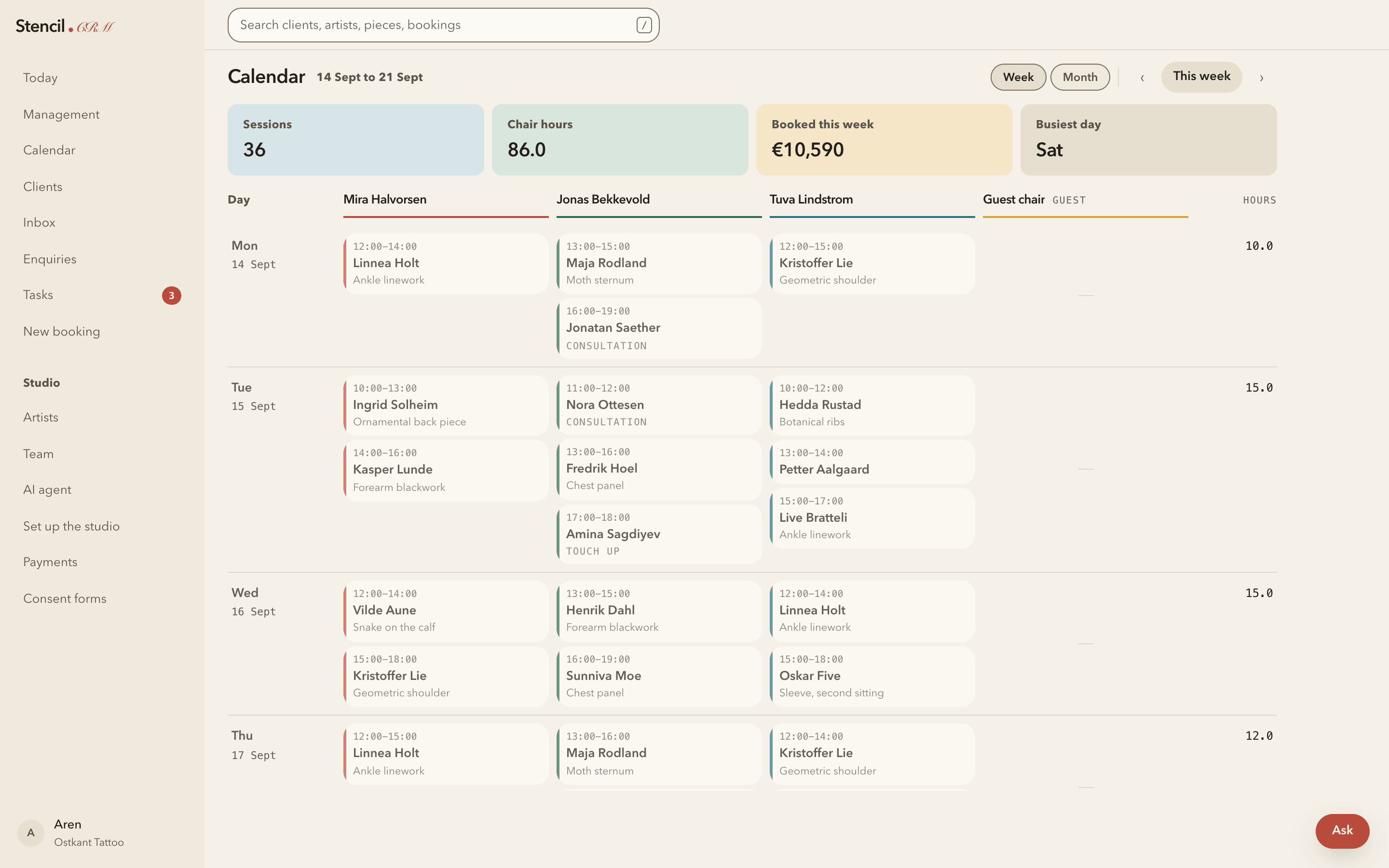
The day drawn as chairs against the studio's own opening hours. Week and month views, and booking straight from the board.
Studio management software
Stencil keeps the day board, the client, the deposit, the consent form and the Instagram thread the booking came out of in one place. Built for tattoo studios, around the chair rather than the user.
What it does
Each of these is a working part of the product today, not a roadmap item.
The day drawn as chairs against the studio's own opening hours. Week and month views, and booking straight from the board.
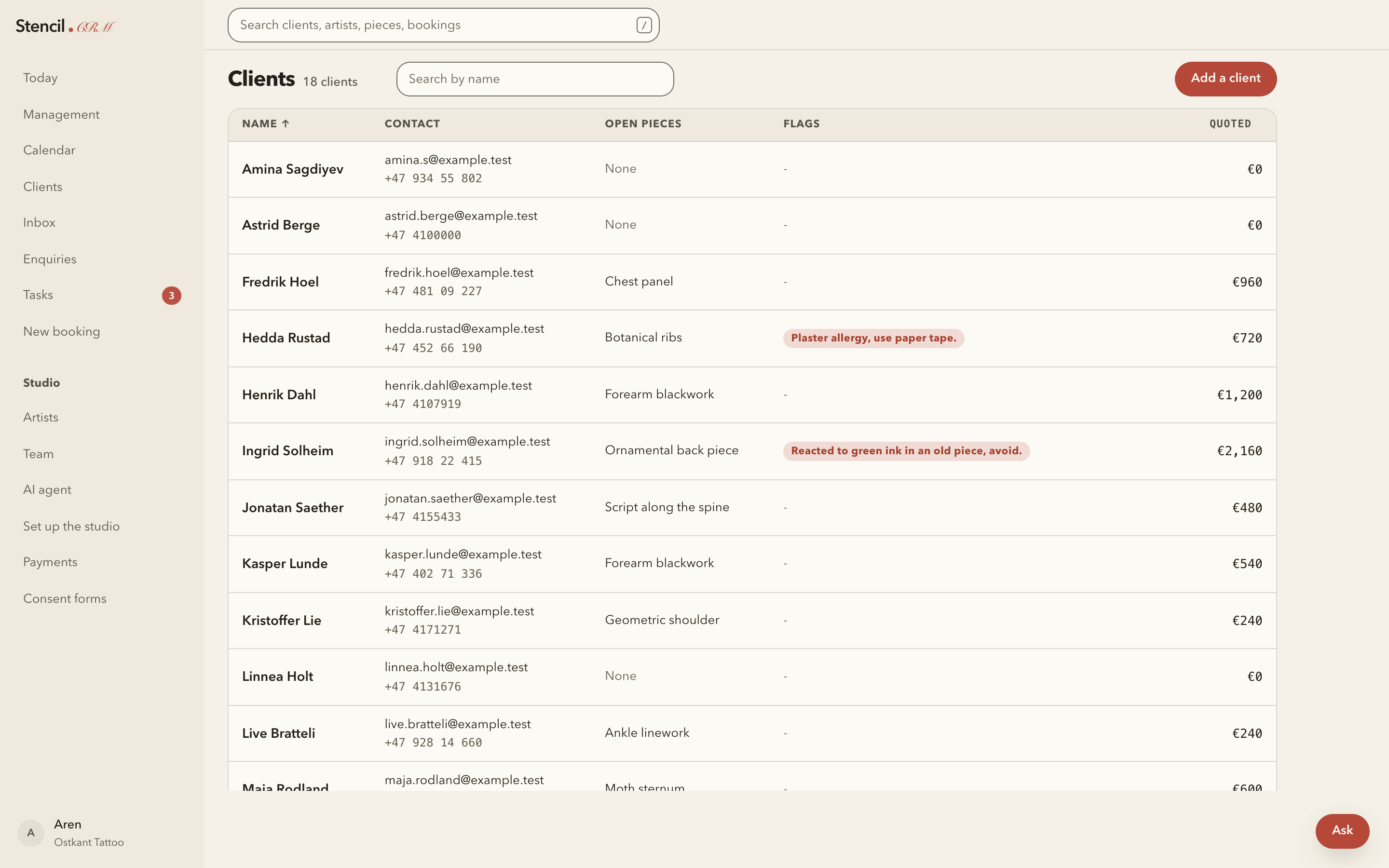
A record per client, the pieces they are having done, every session against each one, reference images and intake answers.
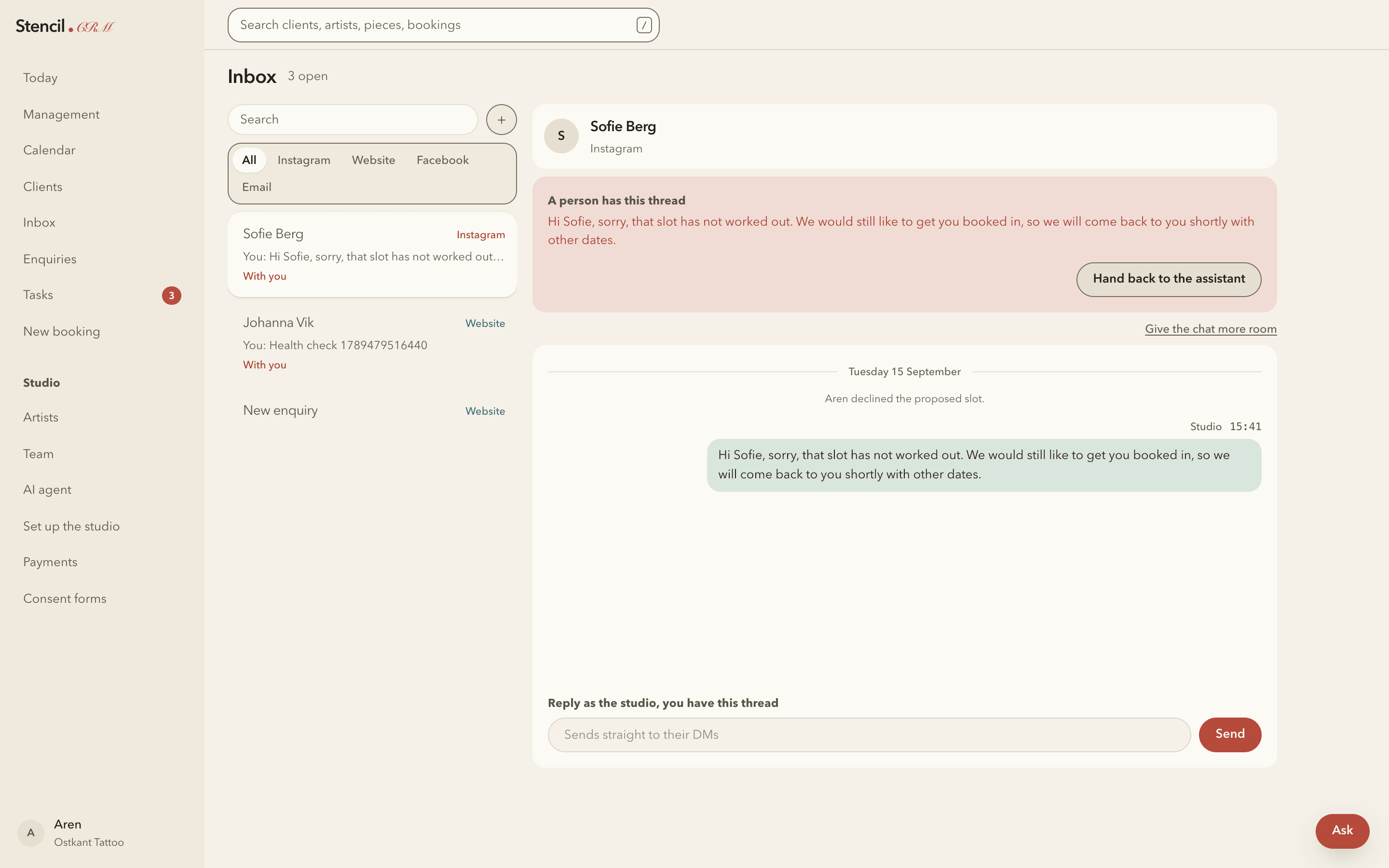
DMs land in the studio's inbox with unread state, beside the website and email enquiries, in the same place as the booking.
It replies to enquiries and proposes a slot. It never writes to the diary: somebody approves, and only then is the booking made.
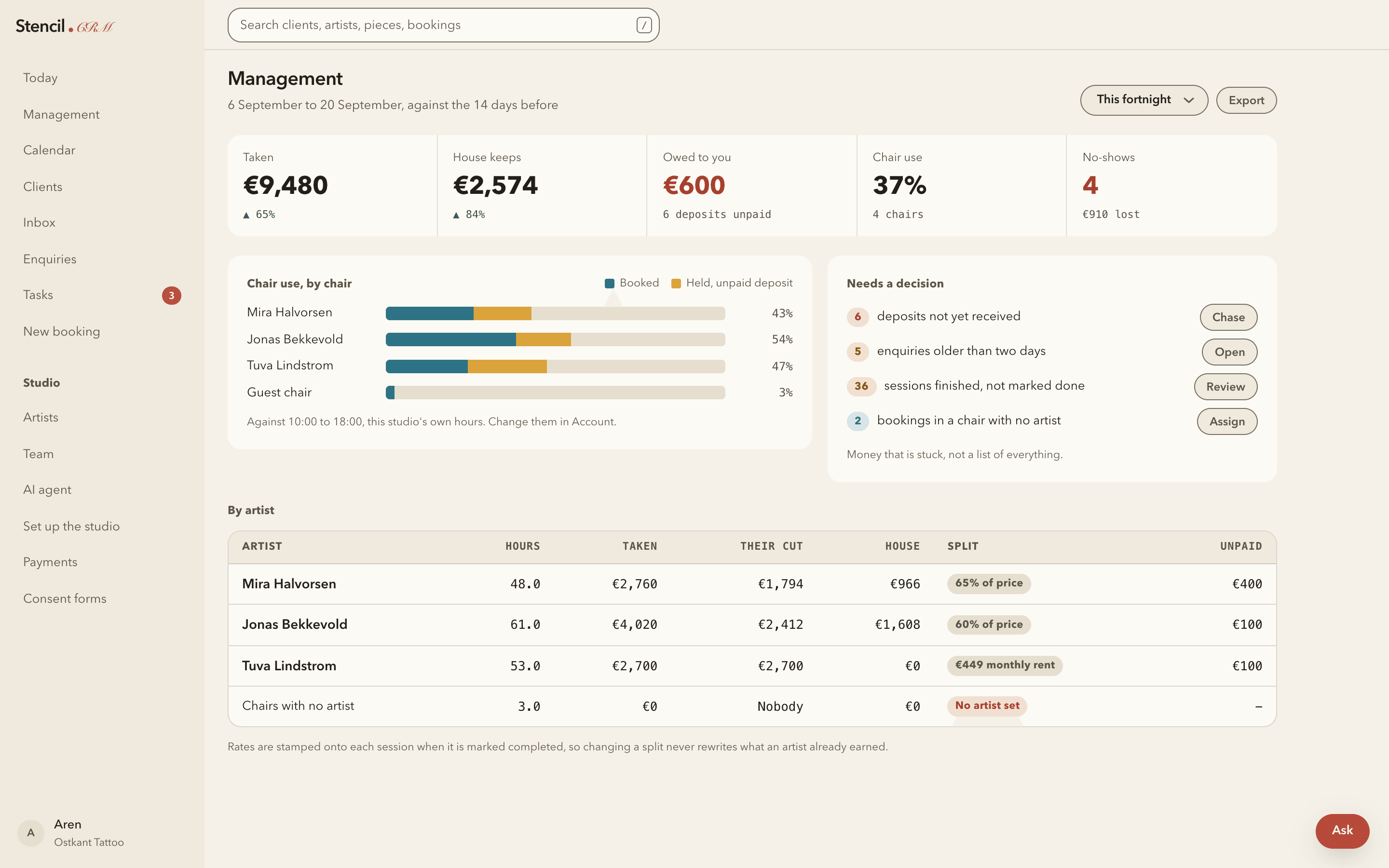
Deposits recorded as bookkeeping, commission per artist, booth rent, and a standing list of what is owed and by whom.
Consent captured against the session it belongs to, so it exists before the needle and can be found afterwards.
Two roles, admin and artist. An artist sees their own book and clients, not the studio's money or roster. One person, many studios.
Hours, chairs, commission splits, booth rent and deposit policy are settings. Nothing about how a studio runs is baked into the software.
One search across clients, artists, pieces and bookings, and a task list for the things the day left behind.
How it works
Four screens from the running product, loaded with the example studio that ships with every new account.
The day
A studio has chairs; artists occupy them. The board is drawn from the hours that studio actually opens, so an empty column is a real gap rather than a rendering quirk.
The enquiry
Most studio work arrives as an Instagram message at eleven at night from somebody the studio has never met. That message, the client record it becomes, the booking and the deposit are one chain, not four systems.
The money
Commission per artist, booth rent, deposits taken and deposits still outstanding, with the rate stamped onto each session when it completes — so changing a split never rewrites what somebody already earned.
The client
The piece, the sittings it has taken, what was paid and what is still owed, the consent on file and the conversation it all started in.
Setting it up
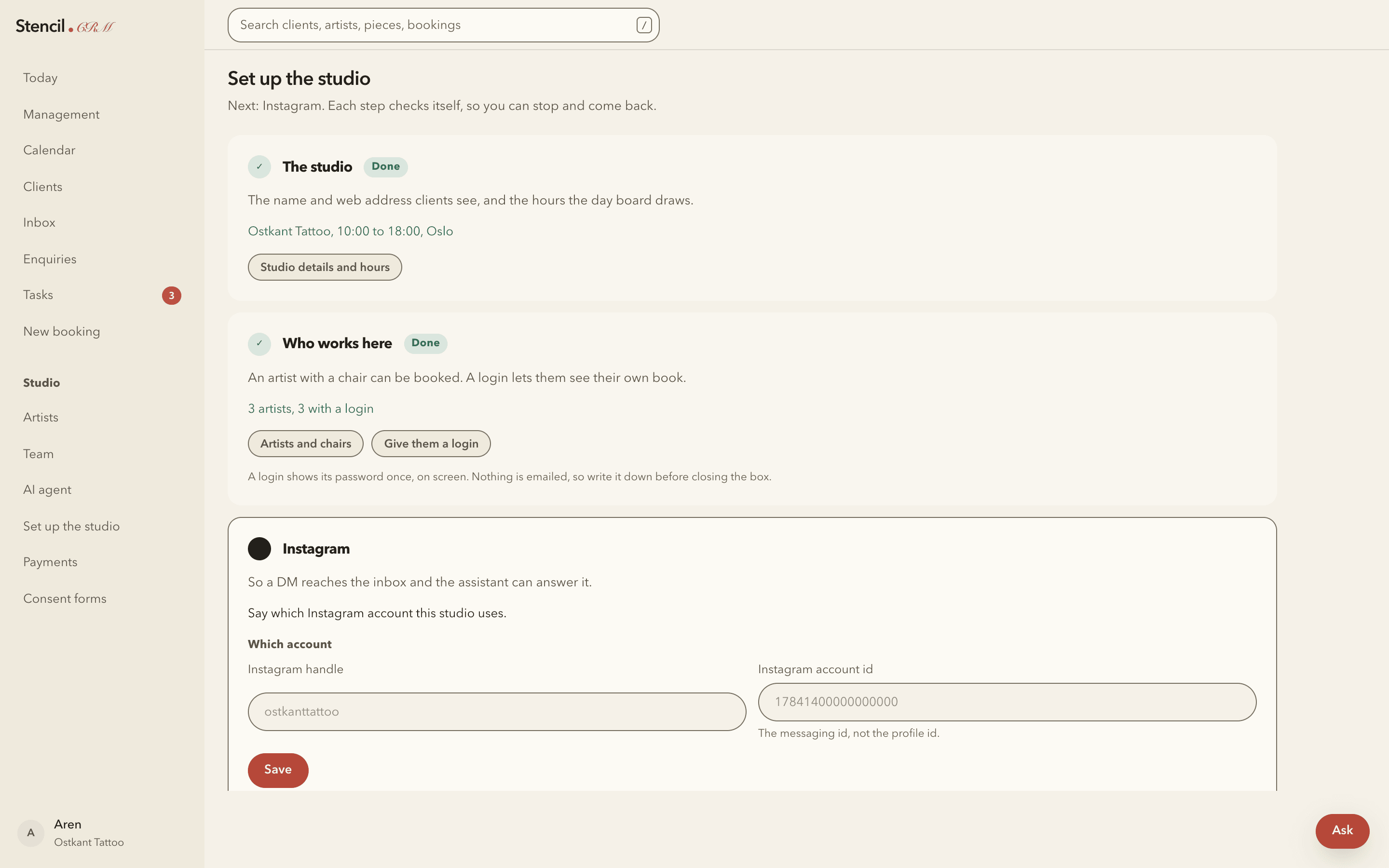
Studios are small. The whole setup is one page the owner works through at their own desk, and every step checks itself, so it is safe to stop halfway and come back.
A new account can load an example studio — chairs, artists, a week of bookings, clients and payments — so the software can be judged full rather than empty. It removes cleanly when you are finished with it.
Where it stands
Stencil has not launched. There are no customers, no case studies and no pricing, and none of those will be invented here. What follows is the whole picture.
Create a studio, load the example data, and see whether it holds up against how yours actually runs.
A contact address is not set up yet.